


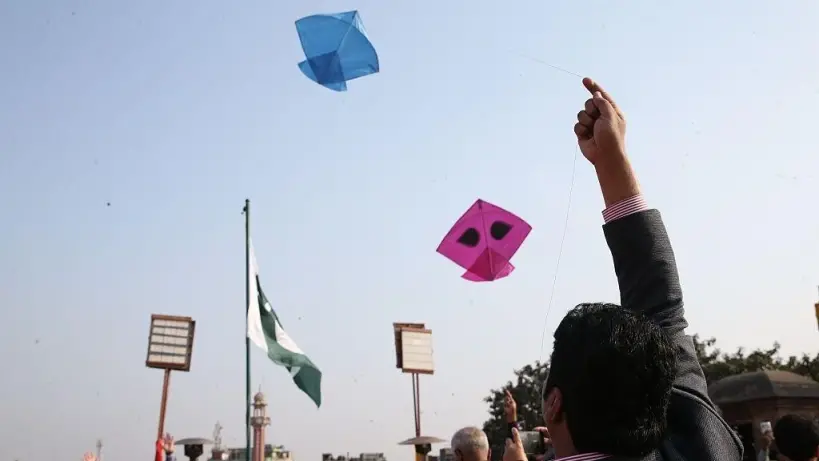
The streets of Lahore are alive with the vibrant hues of kites soaring through the sky, signaling the return of the much-loved Basant festival. After nearly two decades of absence, due to safety concerns, the festival is back, bringing with it a wave of nostalgia and excitement.
As dusk falls, the rooftops are filled with families and friends, their laughter echoing as kites dance across the skyline. It's a scene reminiscent of Lahore's past, where kite flying wasn't just a pastime but a cultural celebration.
A Tradition Revived
For many, this year's Basant marks their first experience of the festival. Abu Bakar Ahmad, a 25-year-old tech engineer, is among them. "It's really difficult!" he exclaims, as he tries to master the skill under the guidance of his cousin. The younger generation, unfamiliar with the art, is eager to learn.
The festival, which heralds the arrival of spring, has a rich history dating back centuries. However, it was banned in 2007 after a series of accidents involving sharp kite strings and aerial firing led to serious injuries and fatalities.
A Cultural Bond
Kanwal Amin, 48, expresses the essence of Basant: "It's gathering, it's love. Flying kites is ok, but the main thing is bonding." The festival is a time to connect, enjoy good food, and celebrate tradition.
Kashif Siddiqui, a pharmacist, reminisces about past Basant festivals. His last experience was when his son was just three years old. Now his son is here with his own children, continuing the family tradition. "It's special for Lahoris," he says. "It's not about kite and thread, it's about tradition. My father and his father before him used to do it."
Safety Measures in Place
The festival's return comes with stringent safety measures. To ensure public safety, the event is now limited to three days. Motorcyclists have been equipped with metal rods to prevent dangerous encounters with kite strings, and large kites, which require stronger strings, are prohibited.
Authorities have also placed nets over certain streets to prevent metal kite strings from causing electric shocks or short circuits. Deputy Inspector General Faisal Kamran explains that over 100,000 kites and 2,100 rolls of string have been seized in efforts to curb dangerous practices.
The Economic Impact
Yousaf Salahuddin, a long-time advocate of the festival, highlights the economic benefits that Basant brings to Lahore. "There was a lot of revenue," he states, noting that the festival boosts local businesses, from street vendors to hotels.
His emotional connection to the festival is evident as he recalls childhood memories of chasing cut kites across rooftops. "It's always been a part of us," he says, reflecting on the city's deep-seated tradition.
Looking Ahead
With the Punjab government promoting the festival and implementing safety measures, there is hope that Basant can continue without incident. The streets of Mochi Gate are bustling with kite buyers, eager to partake in the revived tradition. Usman, a kite seller, reports brisk business, having sold over 7,000 kites in a few days.
As the festival unfolds, the vibrant display of kites against the Lahore skyline is a testament to the city's enduring love for Basant. While the challenges remain, the festival's return is a hopeful sign of cultural revival and community spirit.





Comments
Log in to write a comment